



Mobile Browsing
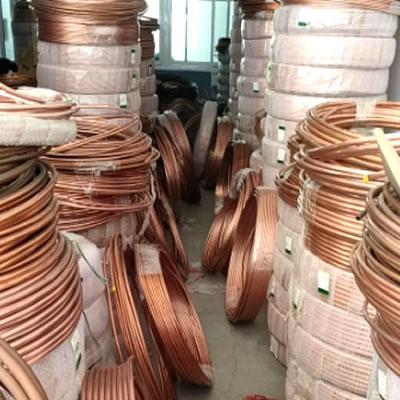
Copper tubing (also known as copper pipe), also referred to as red copper tubing, is a type of non-ferrous metal seamless tube that is either pressed or drawn. It is primarily used in building cold and hot water systems, heating and cooling pipelines, conductive and heat dissipation components of electronic products, as well as in industrial fields such as heat exchange equipment, oxygen generation equipment, and hydraulic systems. It is lightweight, has excellent thermal and electrical conductivity, and its expansion coefficient is only 1/10 of that of plastic pipes, making it less prone to cracking due to thermal expansion and contraction. Its organizational structure can inhibit the growth of bacteria. Copper tubing dating back 4,500 years from the Egyptian pyramids is still usable. Copper plumbing systems have the same lifespan as buildings and can be fully recycled and reused. The main disadvantages are the high cost of raw materials and strict requirements for welding and installation processes. In modern architecture, it has become the preferred material for water pipelines and heating and ventilation systems, combining characteristics of strong corrosion resistance, resistance to oxidation, ease of bending and shaping, and resistance to high temperatures and pressures (with a melting point of 1083°C).
Copper tubing (also known as copper pipe), also referred to as red copper tubing, is a type of non-ferrous metal seamless tube that is either pressed or drawn. It is primarily used in building cold and hot water systems, heating and cooling pipelines, conductive and heat dissipation components of electronic products, as well as in industrial fields such as heat exchange equipment, oxygen generation equipment, and hydraulic systems. It is lightweight, has excellent thermal and electrical conductivity, and its expansion coefficient is only 1/10 of that of plastic pipes, making it less prone to cracking due to thermal expansion and contraction. Its organizational structure can inhibit the growth of bacteria. Copper tubing dating back 4,500 years from the Egyptian pyramids is still usable. Copper plumbing systems have the same lifespan as buildings and can be fully recycled and reused. The main disadvantages are the high cost of raw materials and strict requirements for welding and installation processes. In modern architecture, it has become the preferred material for water pipelines and heating and ventilation systems, combining characteristics of strong corrosion resistance, resistance to oxidation, ease of bending and shaping, and resistance to high temperatures and pressures (with a melting point of 1083°C).
Copper tubing (also known as copper pipe), also referred to as red copper tubing, is a type of non-ferrous metal seamless tube that is either pressed or drawn. It is primarily used in building cold and hot water systems, heating and cooling pipelines, conductive and heat dissipation components of electronic products, as well as in industrial fields such as heat exchange equipment, oxygen generation equipment, and hydraulic systems. It is lightweight, has excellent thermal and electrical conductivity, and its expansion coefficient is only 1/10 of that of plastic pipes, making it less prone to cracking due to thermal expansion and contraction. Its organizational structure can inhibit the growth of bacteria. Copper tubing dating back 4,500 years from the Egyptian pyramids is still usable. Copper plumbing systems have the same lifespan as buildings and can be fully recycled and reused. The main disadvantages are the high cost of raw materials and strict requirements for welding and installation processes. In modern architecture, it has become the preferred material for water pipelines and heating and ventilation systems, combining characteristics of strong corrosion resistance, resistance to oxidation, ease of bending and shaping, and resistance to high temperatures and pressures (with a melting point of 1083°C).
Previous:Galvanized angle steel
Next :channel steel