



Mobile Browsing
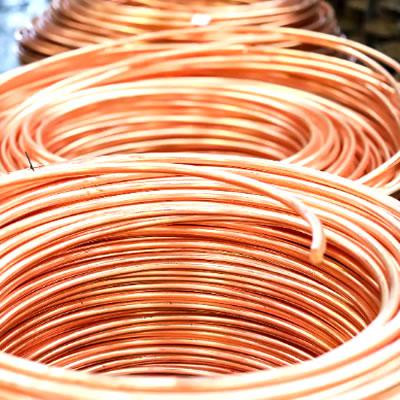
Copper wire is a wire-like conductor made primarily of copper. Its conductivity is second only to silver and its cost is lower, making it a core material for power transmission and electronic equipment. Humans have been using copper artifacts since the Bronze Age. In modern industry, copper wire can be drawn to micron-level diameters due to its high ductility, meeting the needs of different scenarios. Based on purity, it can be divided into types such as oxygen-free copper and low-oxygen copper. Among them, oxygen-free copper is mostly used in the manufacture of precision electronic components due to its low impurities and high conductivity stability [1-2]. The conductivity standard of copper wire adopts the International Annealed Copper Standard (IACS), and the conductivity of pure copper can reach 100% IACS [1]. As of 2023, the production process of copper wire has formed two major technical systems: pyrometallurgy and hydrometallurgy, and material quality is ensured through methods such as cross-sectional observation and instrument testing [2-3]. In 2024, China issued the national standard GB/T 3953-2024 "Electrical Round Copper Wire"
Copper wire is a wire-like conductor made primarily of copper. Its conductivity is second only to silver and its cost is lower, making it a core material for power transmission and electronic equipment. Humans have been using copper artifacts since the Bronze Age. In modern industry, copper wire can be drawn to micron-level diameters due to its high ductility, meeting the needs of different scenarios. Based on purity, it can be divided into types such as oxygen-free copper and low-oxygen copper. Among them, oxygen-free copper is mostly used in the manufacture of precision electronic components due to its low impurities and high conductivity stability [1-2]. The conductivity standard of copper wire adopts the International Annealed Copper Standard (IACS), and the conductivity of pure copper can reach 100% IACS [1]. As of 2023, the production process of copper wire has formed two major technical systems: pyrometallurgy and hydrometallurgy, and material quality is ensured through methods such as cross-sectional observation and instrument testing [2-3]. In 2024, China issued the national standard GB/T 3953-2024 "Electrical Round Copper Wire"
Copper is not very reactive chemically and is not easily oxidized in air. After being left in humid air for a long time, copper surface will form verdigris (basic copper carbonate), which can prevent further corrosion [4]. The conductivity standard of copper wire adopts the International Annealed Copper Standard (IACS), and the conductivity of pure copper can reach 100% IACS [1]. Copper wire has excellent conductivity and is widely used in the manufacture of wires, cables, brushes, etc. In addition, copper wire has good thermal conductivity and is often used to manufacture magnetic instruments and meters that require protection against magnetic interference, such as compasses and aviation instruments [4]. It has excellent ductility, and after annealing treatment, the elongation rate can exceed 50%, making it suitable for drawing micro-wires with a diameter of 0.015mm [2-3]. Copper wire has excellent plasticity and is easy to process through hot pressing and cold pressing, allowing it to be made into copper materials such as tubes, rods, wires, strips, belts, plates, and foils
Previous:copper coin
Next :Last