



Mobile Browsing
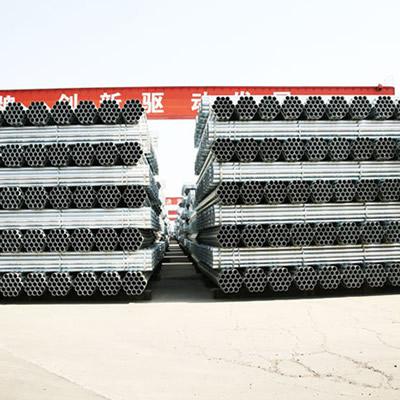
Hot-dip galvanizing involves reacting molten metal with the iron substrate to form an alloy layer, thereby combining the substrate and the coating. The process begins with acid pickling of the steel pipe to remove iron oxide on its surface. After acid pickling, the pipe is cleaned in a tank containing an aqueous solution of ammonium chloride or zinc chloride, or a mixture of both, and then sent to the hot-dip galvanizing tank. Hot-dip galvanizing offers advantages such as uniform coating, strong adhesion, and long service life. The steel pipe substrate undergoes complex physical and chemical reactions with the molten coating solution, forming a corrosion-resistant, tightly structured zinc-iron alloy layer. The alloy layer is integrated with the pure zinc layer and the steel pipe substrate, resulting in strong corrosion resistance.
1. Uniformity of galvanized layer: The steel pipe sample shall not turn red (copper-plated color) after being immersed in a copper sulfate solution for 5 consecutive times
2. Surface quality: The surface of galvanized steel pipes should have a complete galvanized layer, without any uncoated black spots or bubbles. Minor roughness and localized zinc nodules are permissible.
Purpose
It is widely used for low-pressure fluid transportation such as fire water supply, gas, air, oil, heating steam, and mechanical structures.
product standard
GB/T3091-2015 standard
The straight seam welded pipes that comply with the GB/T3091-2015 standard are suitable for low-pressure fluid transportation, including water, sewage, gas, air, heating steam, and some other structural applications.
Galvanized steel pipes are categorized by the type of steel used. Galvanized steel pipes are further divided into cold-dip galvanized steel pipes and hot-dip galvanized steel pipes. Cold-dip galvanized steel pipes have been banned, while the latter is still temporarily advocated for use by the state. In the 1960s and 1970s, developed countries internationally began to develop new types of pipes and gradually banned galvanized pipes. The Ministry of Construction and three other ministries in China also issued documents explicitly banning the use of galvanized pipes as water supply pipes from 2000 onwards. Cold water pipes in newly built residential areas rarely use galvanized pipes, while some residential areas use galvanized pipes for hot water pipes. Hot-dip galvanized steel pipes are widely used in fire protection, electricity, and highways.
weight coefficient
Nominal wall thickness (mm): 2.0, 2.5, 2.8, 3.2, 3.5, 3.8, 4.0, 4.5.
Coefficient parameters (c): 1.064, 1.051, 1.045, 1.040, 1.036, 1.034, 1.032, 1.028.
Steel grades: Q215A; Q215B; Q235A; Q235B.
Test pressure value/Mpa: 3Mpa for D10.2-168.3mm; 5Mpa for D177.8-323.9mm
Previous:First
Next :galvanized pipe