



Mobile Browsing
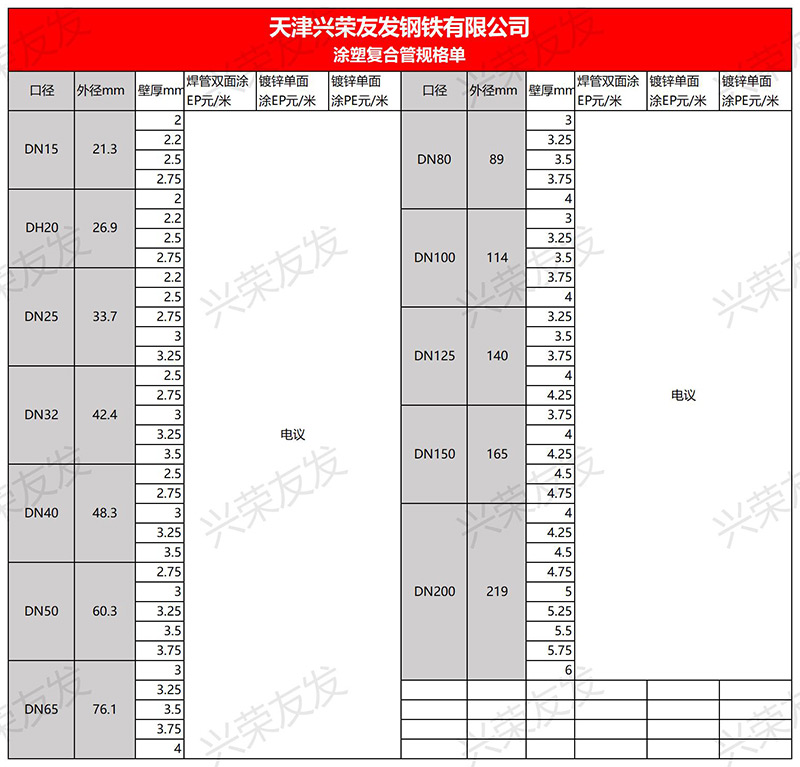
Coated plastic composite pipes are steel-plastic composite materials that use steel pipes as the base pipes and plastic powder as the uncoated material. They are coated with a plastic layer on their surface through processes such as suction coating and spray coating, or with a plastic layer on both their inner and outer surfaces, or with other materials on the outer surface for corrosion protection. When the base pipes are welded steel pipes, they should comply with the specifications of GB/T3091-2015. When using spiral submerged arc welded steel pipes, they should comply with the specifications of SY/T5037. When using seamless steel pipes, they should comply with the specifications of GB/T8163. Coated plastic pipes are widely used in construction water supply, sewage treatment, chemical industry, petroleum, natural gas, highway guardrail panels, conical poles, pharmaceuticals, power plants, cross-sea bridge pillars, and applications that can withstand medium temperatures up to 260°C. Coated plastic pipes have a wide range of applications and are long-lasting, energy-saving, and environmentally friendly products. Due to the high strength of steel pipes and the chemical corrosion resistance of engineering plastics, the surface finish of coated plastic pipes reaches 0.3-1μm, resulting in a low resistance coefficient when transporting various fluids and preventing the growth of bacteria and mold. They have good scale resistance, and in general, their fluid transportation capacity is 7%-12% higher than that of steel pipes of the same diameter, reducing transportation power consumption by 15%. Their service life can reach 50 to 100 years. The coating materials are divided into polyethylene (PE) and epoxy resin (EP). Due to the high production flexibility of the coating process, the diameter range of coated plastic pipes is DN15 to DN2000, with a length tolerance of +2mm for cut-to-length pipes of 6000mm and 12000mm.
Purpose
1. Various forms of circulating water systems (domestic circulating water, industrial circulating water) exhibit excellent performance.
2. Fire water supply system.
3. Water supply and drainage systems for various buildings (especially applicable to cold and hot water systems in hotels, restaurants, and residential areas).
4. Transportation of various chemical fluids (resistant to corrosion by acids, alkalis, and salts).
5. Buried pipes and road-crossing pipes for wires and cables.
6. Ventilation pipes, water supply pipes, and drainage pipes for mines and shafts.
product standard
GB/T28897-2012 Steel-plastic composite pipe
Previous:First